In 2026, I see AIVA AI changing music creation by making original tracks faster without taking control away from the creator. That matters when a deadline is close and stock music feels flat.
For YouTubers, game developers, filmmakers, indie creators, and composers, an AIVA AI music generator can turn a rough idea into usable music in minutes. What keeps it relevant is simple, I can shape the result instead of settling for whatever the system gives me.
What AIVA AI actually does for modern creators
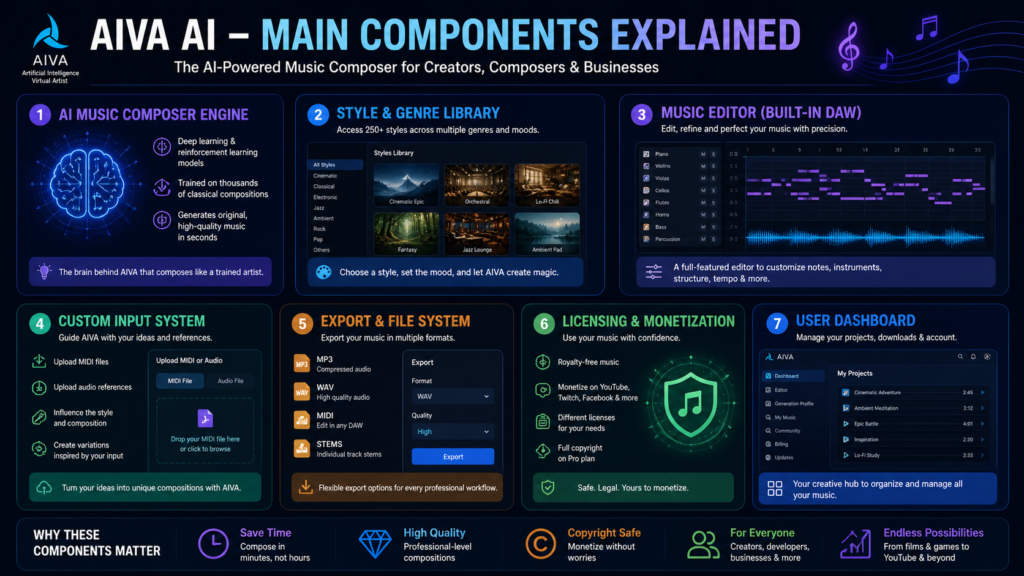
I think of AIVA as an AI music composer for 2026 that is strongest when I need instrumental ideas fast. It can write in more than 250 styles, including cinematic, orchestral, ambient electronic, classical, and solo piano. That range makes it practical for creators who work across different projects.
It also works for two kinds of users. If I’m new, I can start with presets and get a draft quickly. If I already compose, I can treat it like a sketch partner and rebuild the track around my own taste.
How the AIVA AI music generator builds a track
The workflow is plain and fast. I choose a style, set the mood, pick a length, and generate a track. If I want closer control, I can upload audio or MIDI as an influence.
AIVA also lets me create reusable style models. That’s useful when I want a channel, game, or film to keep a consistent sound across several pieces.
Why its MIDI-first design matters
This is where AIVA feels more serious than many AI music tools. Because its workflow is MIDI-first, I can edit notes, change voicings, swap instruments, and adjust structure after the first pass.
For composers, filmmakers, and game teams, that flexibility matters. I can export MIDI or sheet music, then fine-tune cues for a scene, a menu loop, or a combat sequence without rebuilding everything by hand.
How I would use AIVA for videos, games, and film
AIVA fits best when I need music that supports a project, not music that tries to steal the spotlight.
Why YouTubers and indie creators can save time with custom music
For video essays, podcasts, trailers, ads, or short films, I’d use AIVA as an AI soundtrack generator that gives me original background music fast. That helps me avoid generic stock tracks that sound overused.
Because the music is custom, it can match pacing and tone more closely. I can also export a quick MP3 when speed matters most.
How game developers and filmmakers can shape mood with precision
In games and film, mood changes scene by scene. I’d use AIVA for tension cues, heroic themes, soft piano beds, or ambient layers that need room to breathe.
The editable exports help most here. I can fit music to cuts, menus, levels, and loops, then revise timing or orchestration when the project changes.
What stands out in 2026, plus the limits to know
AIVA feels production-ready because it combines style variety, quick regeneration, built-in editing, and exports like MP3, MIDI, and sheet music. Paid plans also give stronger ownership rights, which matters if I want to monetize my work.
Still, I wouldn’t pick it for vocal-heavy pop songs. It is best at structured, editable instrumental music. There is also a learning curve, especially if I want polished results beyond the first draft.
The features that make AIVA feel production-ready
What I value most is speed with control. I can move from idea to usable track without starting from zero.
Who may want a different tool instead
If my focus is vocals, lyrics, or radio-style pop production, I’d look elsewhere. AIVA fits composers and visual storytellers better.
Conclusion
AIVA AI shows where music creation is heading, faster ideas, better editing, and a stronger human plus AI workflow. I don’t see it replacing musical judgment, but I do see it removing slow, repetitive setup work.
If I need original, editable music for content, games, film, or scoring, AIVA AI is one of the smartest tools to watch in 2026.