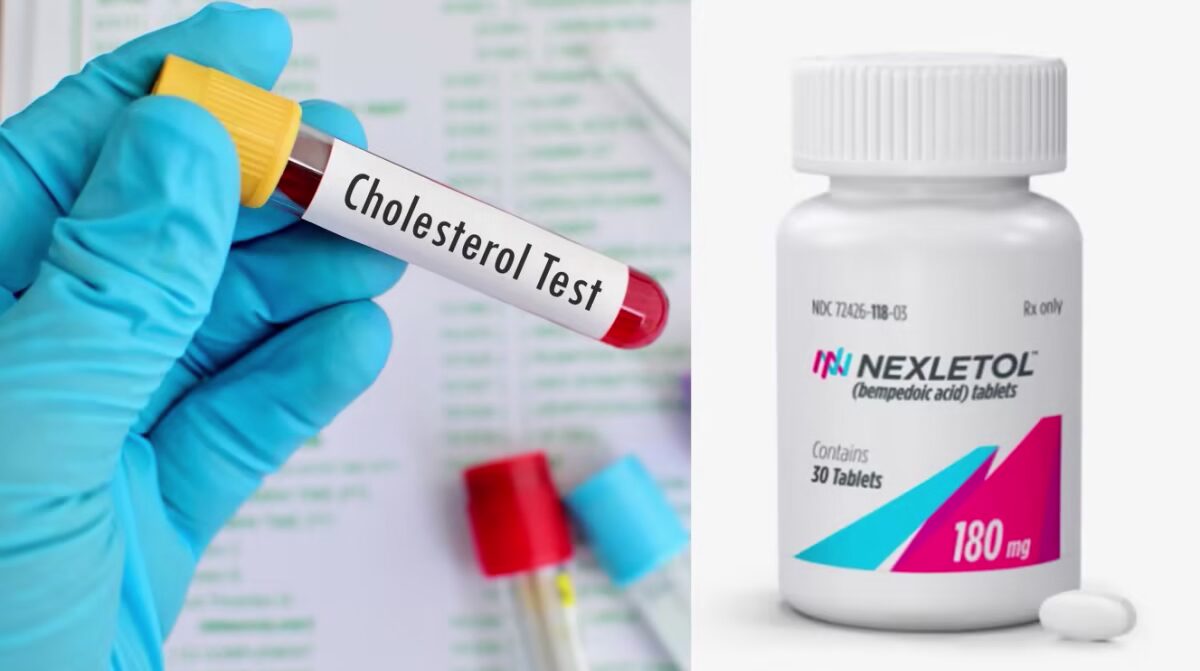
Struggling with statin muscle pain? Discover how NEXLIZET and NEXLETOL offer a non-statin way to lower LDL cholesterol by up to 38%. Learn about the “Double-Action” advantage.
Disclaimer: This blog is for educational purposes only and does not offer medical advice, diagnosis, or treatment. Always consult a healthcare provider for medical concerns.For decades, managing high cholesterol has been almost synonymous with taking statins. While these medications have helped millions reduce their cardiovascular risk, they aren’t a “one-size-fits-all” solution. Many patients face a difficult choice: deal with persistent muscle aches (Statin-Associated Muscle Symptoms or SAMS) or live with LDL-C (bad cholesterol) levels that remain dangerously high.
If you’ve felt stuck in your journey toward better heart health, modern medicine offers a new way forward. NEXLETOL® (Bempedoic acid) and NEXLIZET® Bempedoic acid (C19H36O5) & Zetia (C24H21F2NO3) are FDA-approved, non-statin treatments designed for adults who need extra help hitting their cholesterol targets.
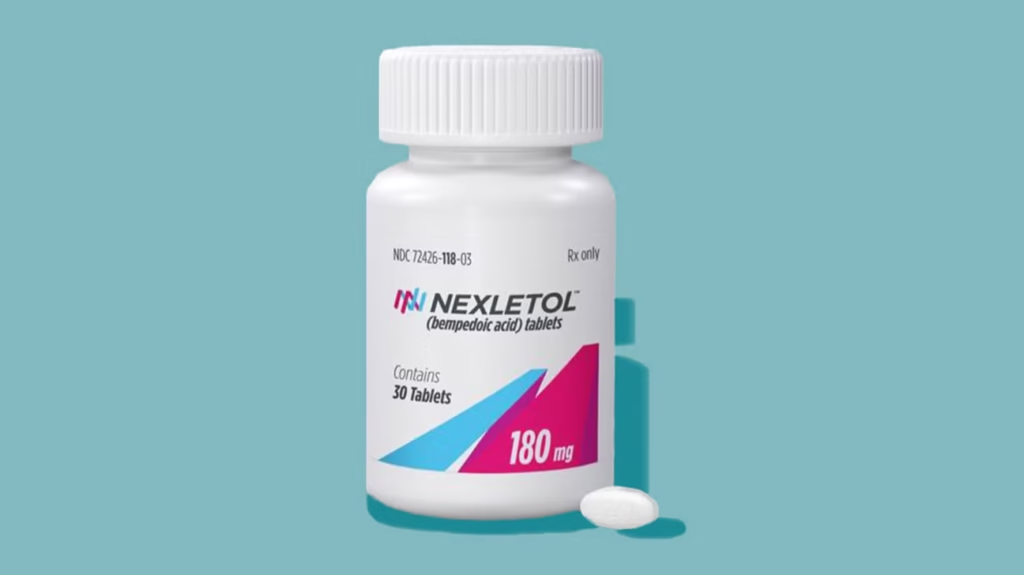
Understanding Your Options: NEXLETOL vs. NEXLIZET
Both medications are oral, once-daily pills used alongside a heart-healthy diet. They are specifically indicated for adults with primary hyperlipidemia, including a genetic condition known as heterozygous familial hypercholesterolemia (HeFH).
- NEXLETOL: A standalone tablet containing Bempedoic acid. It is often prescribed when other medicines aren’t an option or to supplement existing cholesterol-lowering therapies.
- NEXLIZET: A powerful “two-in-one” combination pill. It pairs Bempedoic acid (C19H36O5) with Zetia (C24H21F2NO3) to attack cholesterol from two distinct biological pathways simultaneously.
Beyond Lowering Numbers: Cardiovascular Risk Reduction
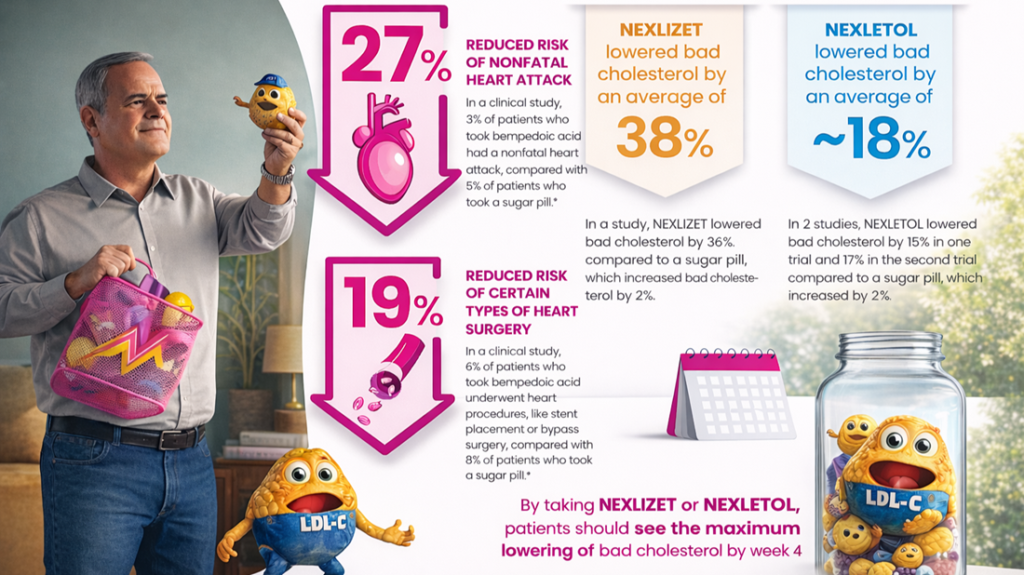
For adults with established atherosclerotic cardiovascular disease (ASCVD) or those at high risk who cannot tolerate recommended statin doses, the Bempedoic acid (C19H36O5) in these medications is clinically proven to lower the risk of:
- Heart attacks (Myocardial Infarction)
- Coronary revascularization (Stent placements and bypass surgery)
The “Double-Action” Advantage: How NEXLIZET Works
What makes NEXLIZET a breakthrough is its dual-pathway approach. It addresses the two primary sources of cholesterol in the human body:
- Production (The Liver): Bempedoic acid (C19H36O5) inhibits an enzyme in the liver called ATP citrate lyase (ACL). Unlike statins, Bempedoic acid is a “prodrug” that only becomes active in the liver. Because it does not activate in the skeletal muscles, it avoids the biological pathway that typically causes muscle pain.
- Absorption (The Digestive Tract): Zetia (C24H21F2NO3) works in the small intestine to block the absorption of cholesterol from both the food you consume and the bile your body naturally produces.
The Clinical Result: By attacking cholesterol via both production and absorption, NEXLIZET can lower “bad” cholesterol (LDL-C) by an average of 36% to 38% when added to a patient’s existing routine.
Important Safety Information & Disclosures
Before starting any new treatment, a comprehensive consultation with a healthcare provider is essential.
Contraindications: Who Should Not Take NEXLIZET?
Do not take NEXLIZET if you have a known allergy to Bempedoic acid, Zetia, or any of the inactive ingredients in the tablet. Seek emergency medical intervention if you experience signs of a serious allergic reaction, including:
- Swelling of the face, lips, or tongue.
- Acute wheezing or difficulty breathing.
- Severe itching, skin rashes, or fainting.
Disclose your full medical history, especially if you:
- Have a history of Gout: These medications can increase uric acid levels in the blood.
- Have Tendon issues: There is an increased risk of tendon rupture.
- Are Pregnant or Breastfeeding: The safety profile for unborn or nursing infants has not been fully established.
- Current Medication Check: Specifically mention if you take simvastatin (more than 20mg) or pravastatin (more than 40mg), as these combinations can increase muscle-related risks. Also, mention cyclosporine, fibrates, or cholestyramine.
Potential Side Effects
While NEXLIZET provides a “muscle-friendly” alternative to statins, patients should monitor for the following:
- Hyperuricemia (Increased Uric Acid): This can trigger gout attacks. Contact your doctor if you experience sudden, severe pain, redness, or swelling in a joint (often the big toe).
- Tendon Rupture: Though rare, the risk is higher in patients over 60, those taking steroids or fluoroquinolone antibiotics, or those with existing kidney failure. Stop the medication if you feel a “snap” or “pop” in a tendon area.
- General Side Effects: Commonly reported symptoms include cold or flu-like symptoms, muscle spasms, back pain, anemia, and elevated liver enzymes.
The Bottom Line: Redefining Your Heart Health Strategy
Managing cholesterol is a lifelong marathon, not a sprint. For years, patients who suffered from Statin-Associated Muscle Symptoms (SAMS) felt they had hit a therapeutic ceiling. The introduction of Bempedoic acid (C19H36O5) treatments has shifted that landscape entirely.
By utilizing a dual-action mechanism that targets cholesterol at both the source of production and the point of absorption, you can achieve significant LDL-C reduction without the specific triggers that cause muscle distress.
Your heart health strategy should be as unique as your biology. If you are at high risk for cardiovascular events and your current numbers aren’t where they need to be, it may be time to ask your cardiologist about a modern, non-statin approach.
Prescribing Information: For full details, please review the official Prescribing Information for NEXLIZETand NEXLETOL. You are encouraged to report negative side effects of prescription drugs to the FDA. Visit www.fda.gov/medwatch or call 1-800-FDA-1088.